 Subscribe by RSS
Partial Response, Maximum Likelihood (PRML)
Standard read circuits work by detecting flux reversals and interpreting them based on the encoding method that the controller knows has been used on the platters to record bits. The data signal is read from the disk using the head, amplified, and delivered to the controller. The controller converts the signal to digital information by analyzing it continuously, synchronized to its internal clock, and looking for small voltage spikes in the signal that represent flux reversals. This traditional method of reading and interpreting hard disk data is called peak detection.
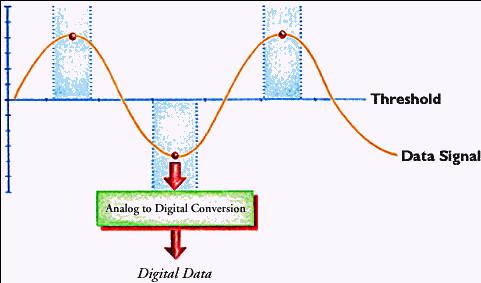
This method works fine as long as the peaks are large enough to be picked out from the background noise of the signal. As data density increases, the flux reversals are packed more tightly and the signal becomes much more difficult to analyze, because the peaks get very close together and start to interfere with each other. This can potentially cause bits to be misread from the disk. Since this is something that must be avoided, in practical terms what happens instead is that the maximum areal density on the disk is limited to ensure that interference does not occur. To take the next step up in density, the magnetic fields must be made weaker. This reduces interference, but causes peak detection to be much more difficult. At some point it becomes very hard for the circuitry to actually tell where the flux reversals are.
To combat this problem a new method was developed that takes a different approach to solving the data interpretation problem. This technology, called partial response, maximum likelihood or PRML, changes entirely the way that the signal is read and decoded from the surface of the disk. Instead of trying to distinguish individual peaks to find flux reversals, a controller using PRML employs sophisticated digital signal sampling, processing and detection algorithms to manipulate the analog data stream coming from the disk (the “partial response” component) and then determine the most likely sequence of bits this represents (“maximum likelihood”).
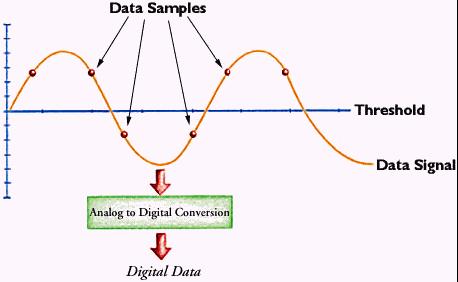
While this may seem like an odd (and unreliable) way to read data from a hard disk, it is in fact reliable enough that PRML, and its successor, EPRML, have become the standard for data decoding on modern hard disks. PRML allows areal densities to be increased by a full 30-40% compared to standard peak detection, resulting in much greater capacities in the same number of platters.
Data recovery Salon welcomes your comments and share with us your ideas, suggestions and experience. Data recovery salon is dedicated in sharing the most useful data recovery information with our users and only if you are good at data recovery or related knowledge, please kindly drop us an email and we will publish your article here. We need to make data recovery Salon to be the most professional and free data recovery E-book online.
World’s Top Data Recovery Hardware Tools
Easy to use at good price
Recover SATA, IDE, External HDDs, NVME SSDs, etc Order Now here
POTABLE DEVICE & NVME SSD RECOVERY TOOL
Recover USB Device and NVME SSDs at high speed! Read Details here.
DFL-PCIE DATA RECOVERY RECHARGE
Best data recovery hardware tool to start a data recovery business, read details here
RECOVER SCRATCHED HDDS

Recover lost data from scratched hard drives, read details here.
SURFACE PRO. RECOVERY
BEST HEAD REPLACEMENT TOOLS
The most cost-effective head replacement tools for Seagate, WD, Samsung, Hitachi, Toshiba, Fujitsu